Massage Therapy for Neck Pain in Markham: Evidence and Safety
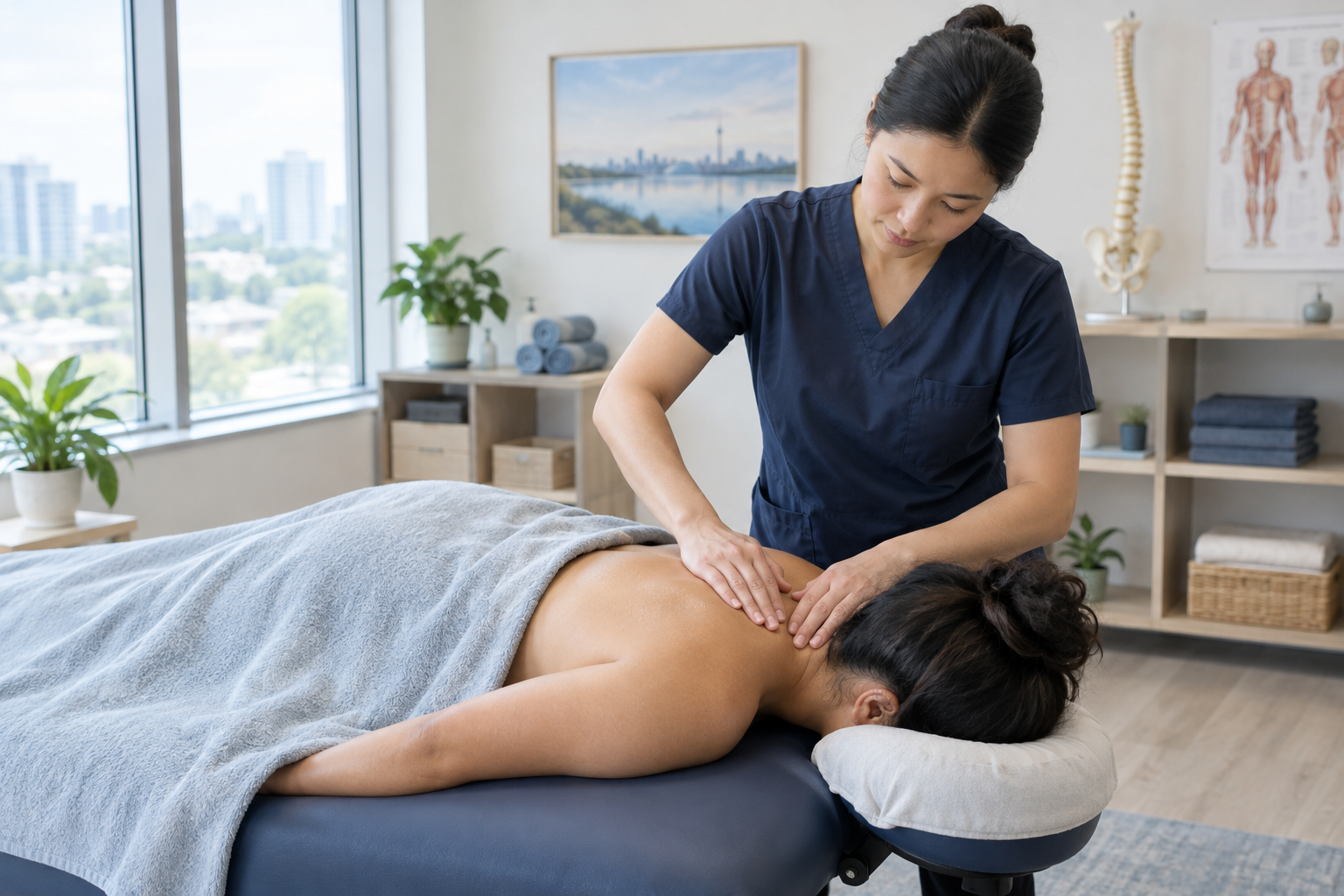
Massage therapy for neck pain uses hands-on soft-tissue techniques that may help some people feel more comfortable in the short term. In Markham, an RMT assessment can consider your symptoms, health history, goals, and preferred pressure. Evidence is mixed, so massage should complement—not replace—appropriate medical assessment when needed.[1][2]
What does the evidence say about massage for neck pain?
The evidence does not support guaranteed or lasting relief. The U.S. National Center for Complementary and Integrative Health says massage may help neck or shoulder pain, but any benefits may be short-lived.[1]
A 2024 Cochrane review included 33 studies with 1,994 adults who had subacute or persistent neck pain. Compared with a sham massage at about 12 weeks, massage probably made little or no difference in pain, function-related disability, quality of life, or participant-reported success; the certainty of the evidence was low.[2] This is why an individualized plan and realistic expectations matter.
What can an RMT appointment involve?
An RMT may ask when your symptoms began, what movements or activities affect them, and whether you have health conditions, medications, injuries, or other concerns that could change the approach. Depending on the assessment and your consent, treatment may use different types of pressure and soft-tissue techniques around the neck, shoulders, and upper back.[3]
In Ontario, consent is required before and throughout massage assessment and treatment. You can ask questions, request changes to pressure or positioning, or withdraw consent at any time.[3]
Before treatment, consider discussing:
- where you feel discomfort and whether it travels into an arm
- numbness, tingling, weakness, dizziness, severe headache, or recent trauma
- your medications, health conditions, pregnancy, surgeries, and skin concerns
- what you hope to do more comfortably after care
- the proposed technique, pressure, possible soreness, alternatives, and cost
Is massage therapy safe for everyone?
Massage therapy generally has a low risk of harmful effects, but it is not risk-free.[1]
Temporary soreness can occur, and rare serious harms have been reported, particularly with vigorous techniques or in people at higher risk of injury.[1][2]
Tell the RMT about relevant medical history and ask whether the pressure or positioning should be modified.[1]
Do not use massage to delay medical care.[1] Seek urgent assessment for neck pain after major trauma, or when neck pain occurs with weakness, numbness, balance problems, fever, chest pain, breathing difficulty, or other concerning symptoms.[4]
How can you prepare for a neck-pain massage appointment in Markham?
Wear comfortable clothing and bring a list of relevant medications and health conditions. Be ready to describe what makes the discomfort better or worse and how it affects work, sleep, exercise, or daily activity. During the session, speak up if pressure, position, or any technique feels uncomfortable.[3]
Massage Therapy/RMT is listed among the services at Markham Pain Clinic: https://www.markhampain.com/services
To ask whether an RMT assessment may be appropriate, contact Markham Pain Clinic: https://www.markhampain.com/contact
To view appointment availability or book online: https://markhampainclinic.janeapp.com/
Frequently asked questions
Can massage cure neck pain?
No. Massage is not a guaranteed cure. Some people may notice short-term comfort, while the best available evidence remains uncertain about meaningful longer-term benefit for persistent neck pain.[1][2]
Will deep pressure work better?
Not necessarily. More pressure is not automatically more effective, and vigorous massage may be inappropriate for some people.[1] Pressure should be based on the assessment, your preferences, your response, and ongoing consent.[3]
Can I stop or change the treatment during an appointment?
Yes. Ontario's massage therapy consent standard says consent applies throughout assessment and treatment. You may ask questions, request a change, or withdraw consent at any time.[3]
When should I seek medical care instead of massage?
Seek medical assessment rather than delaying care when symptoms are severe, follow major trauma, or include weakness, numbness, balance problems, fever, chest pain, breathing difficulty, or other urgent concerns.[4]
Markham Pain Clinic 8312 McCowan Rd Suite #206, Markham, ON L3P 8E1 +1 905-470-2626
Medical disclaimer
This article is for general education only and is not a diagnosis or a substitute for care from a qualified healthcare professional. Treatment suitability depends on an individual assessment. If symptoms are severe, worsening, or concerning, seek appropriate medical care.
Sources: [1] https://www.nccih.nih.gov/health/massage-therapy-what-you-need-to-know — Massage Therapy: What You Need To Know [2] https://www.cochrane.org/evidence/CD004871_massage-neck-pain — Massage for neck pain [3] https://www.cmto.com/rules/standard-of-practice-consent — Standard of Practice: Consent [4] https://www.healthdirect.gov.au/neck-pain — Neck pain - treatments, causes and related symptoms