Acupuncture Safety in Markham: What to Share Before Treatment
Published by Markham Pain Clinic · November 14, 2026
Acupuncture safety starts with a clear health history, an explanation of the proposed care, and your informed consent.[2][4] Before an acupuncture visit in Markham, tell the provider about medicines, bleeding risk, skin problems, current treatments, and anything that affects your comfort.[4] The provider can then decide whether treatment should proceed or change.[2][4]
What should you share before acupuncture?
Tell the provider about your medical conditions, medicines, and other treatments before needles are used.[4] This information is part of deciding whether acupuncture is suitable for you and whether the plan needs to be changed, postponed, or discussed with another healthcare professional.[2][4]
Mention these details during the assessment:
- prescription and non-prescription medicines
- blood-thinning medicine or another reason you may bleed more easily
- a skin condition, rash, wound, or infection near a proposed treatment area
- recent surgery, a new diagnosis, or another treatment you are receiving
- a previous unexpected reaction to acupuncture or needles
- fear of needles, trouble lying in one position, or any area you do not want treated
The NHS advises that acupuncture may not be safe for a person taking blood-thinning medicine, at increased risk of bleeding, or with a skin condition or skin infection.[4] These points do not prove that acupuncture is unsafe for you.[4] They are reasons to pause and have an individual safety discussion rather than leaving important information out.[2][4]
What should informed consent include?
Consent is more than signing a form.[2] The provider should explain what is proposed, why it is being considered, expected benefits, important risks, reasonable alternatives, and what may happen if you decline.[2] You should have time to ask questions and can say no or ask to stop.[2]
When a physiotherapist performs acupuncture in Ontario, the College of Physiotherapists of Ontario treats it as a controlled act within physiotherapy.[2] Its standard requires the physiotherapist to be competent and authorized, explain risks and benefits, obtain informed consent, and document that consent.[2]
A change in technique or treatment area deserves another conversation.[2] Past consent should not be treated as automatic consent for a different plan.[2]
How do clean technique and needle handling affect safety?
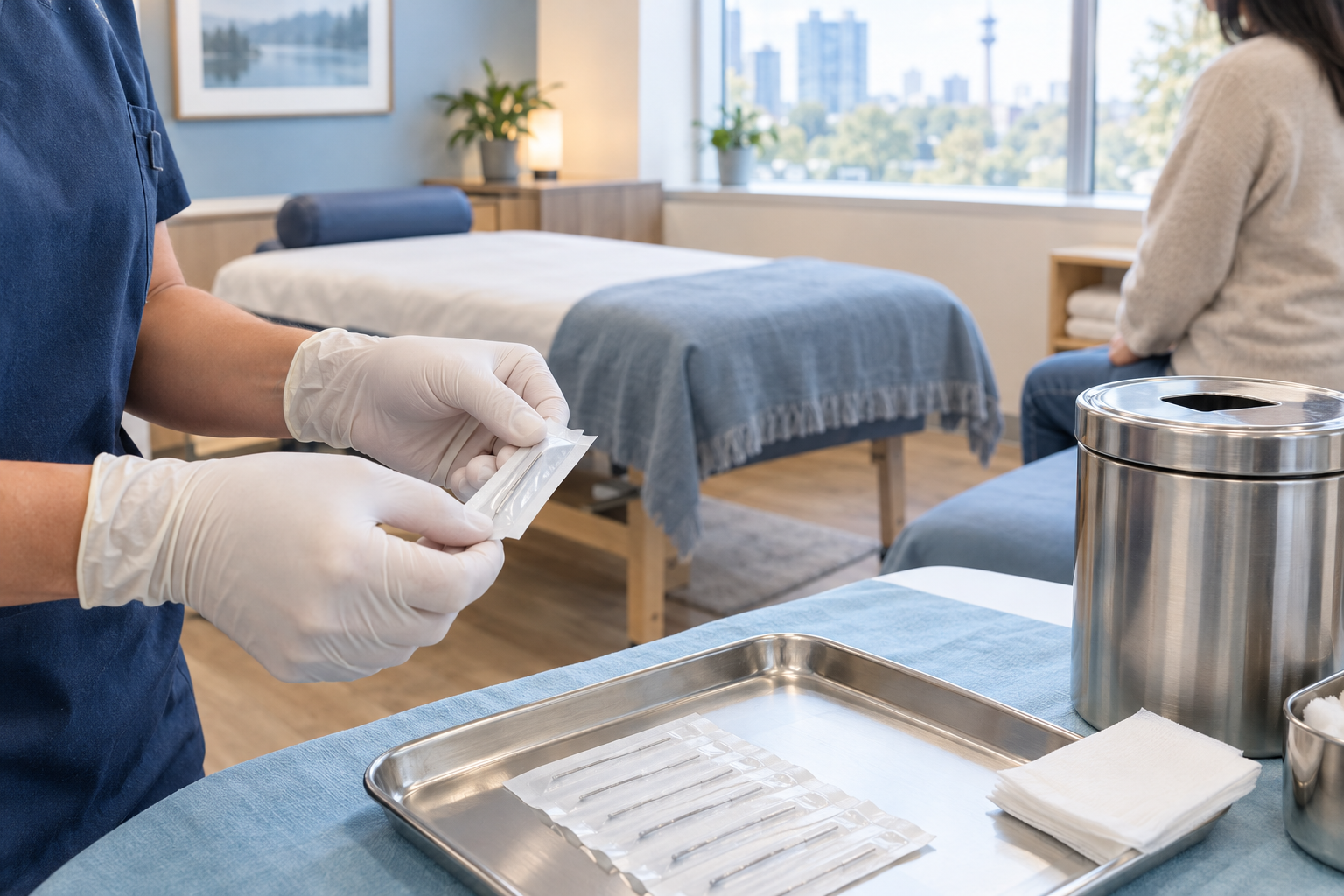
Needle sterility and proper technique matter.[1][3] The U.S. National Center for Complementary and Integrative Health reports that relatively few acupuncture complications have been reported, but complications have occurred when nonsterile needles were used or treatment was delivered improperly.[1] Serious adverse effects can include infection, punctured organs, and injury to the central nervous system when acupuncture is not performed properly.[1]
The College of Physiotherapists of Ontario requires physiotherapists to follow current infection-prevention practices.[3] Its standard includes hand hygiene before and after patient contact, cleaning and disinfecting spaces and equipment before use, and disposing of devices and materials according to established protocols.[3]
Markham Pain Clinic states that its acupuncture service uses sterile, single-use needles and adapts treatment to patient comfort.[5] You can still ask the provider to explain how needles are opened, used, and discarded.[3][5]
What questions can you ask before treatment begins?
A short safety conversation can make the plan easier to understand.[2][4] Consider asking these questions about consent, safety, and alternatives:[2][4]
- What are you hoping this treatment will address?[2]
- What are the expected benefits and limits for my situation?[2]
- What risks or side effects should I know about?[2]
- Does any part of my health history or medication list change the plan?[2][4]
- What alternatives could be considered?[2]
- What should I do if I feel uncomfortable during treatment?[2]
- What symptoms after the visit should prompt me to contact you or seek medical care?
Clear answers should match your health history and the proposed technique.[2][4] Be cautious with any claim that acupuncture is guaranteed to work, is risk-free, or can replace needed medical assessment.[1]
When should acupuncture be postponed?
A provider may postpone or modify treatment when the assessment identifies a safety concern, when key health information is missing, or when you do not consent to the proposed plan.[2][4] A skin infection near a proposed needle site or a higher bleeding risk deserves specific discussion before treatment.[4]
Do not use acupuncture to delay assessment of a new, severe, unexplained, or worsening health problem.[1] NCCIH specifically advises people not to postpone seeing a healthcare provider because they are using acupuncture.[1] Call 911 for an emergency.
Does Markham Pain Clinic offer acupuncture?
Markham Pain Clinic lists Acupuncture as a service and describes the use of fine needles within an individual care plan.[5]
Read about the clinic's acupuncture service: https://www.markhampain.com/services/acupuncture
To ask about an assessment or appointment availability: https://www.markhampain.com/contact https://markhampainclinic.janeapp.com/
Markham Pain Clinic 8312 McCowan Rd Suite #206 Markham, ON L3P 8E1 +1 905-470-2626
Frequently asked questions
Should I stop a blood thinner before acupuncture?
Do not stop or change a prescribed medicine on your own.[4] Tell the acupuncture provider that you take it and ask the prescriber or pharmacist for guidance when needed.[4] Blood-thinning medicine or increased bleeding risk should be discussed before treatment.[4]
Can I ask to stop acupuncture after it begins?
Yes. You can withdraw consent or ask for a pause or change.[2] If acupuncture is provided by an Ontario physiotherapist, informed consent is required for the controlled act.[2]
Are acupuncture needles reused?
Markham Pain Clinic states that it uses sterile, single-use needles for acupuncture.[5] NCCIH notes that nonsterile needles and improper treatment have caused complications.[1]
Is acupuncture safe for everyone?
No treatment is suitable for everyone.[1][2][4] Safety depends on the person's health history, medicines, skin condition, proposed technique, provider competence, and informed consent.[1][2][4] An individual assessment is needed.[2][4]
Medical disclaimer
This article is for general education only. It does not diagnose a condition, determine whether acupuncture is appropriate for you, or replace advice from a qualified healthcare professional.[1] Tell your providers about your health conditions, medicines, and other care.[4] Seek prompt medical assessment for severe, unexplained, or worsening symptoms, and call 911 for an emergency.[1]
Sources: [1] https://www.nccih.nih.gov/health/acupuncture-effectiveness-and-safety — Acupuncture: Effectiveness and Safety [2] https://collegept.org/standard/controlled-acts-standard — Controlled Acts Standard [3] https://collegept.org/standard/infection-control-standard — Infection Control Standard [4] https://www.nhs.uk/tests-and-treatments/herbal-medicines-and-complementary-therapies — Herbal medicines and complementary therapies [5] https://www.markhampain.com/services/acupuncture — Acupuncture | Markham Pain Clinic