Massage Therapy Draping and Privacy in Markham: What to Expect
Published by Markham Pain Clinic · November 9, 2026
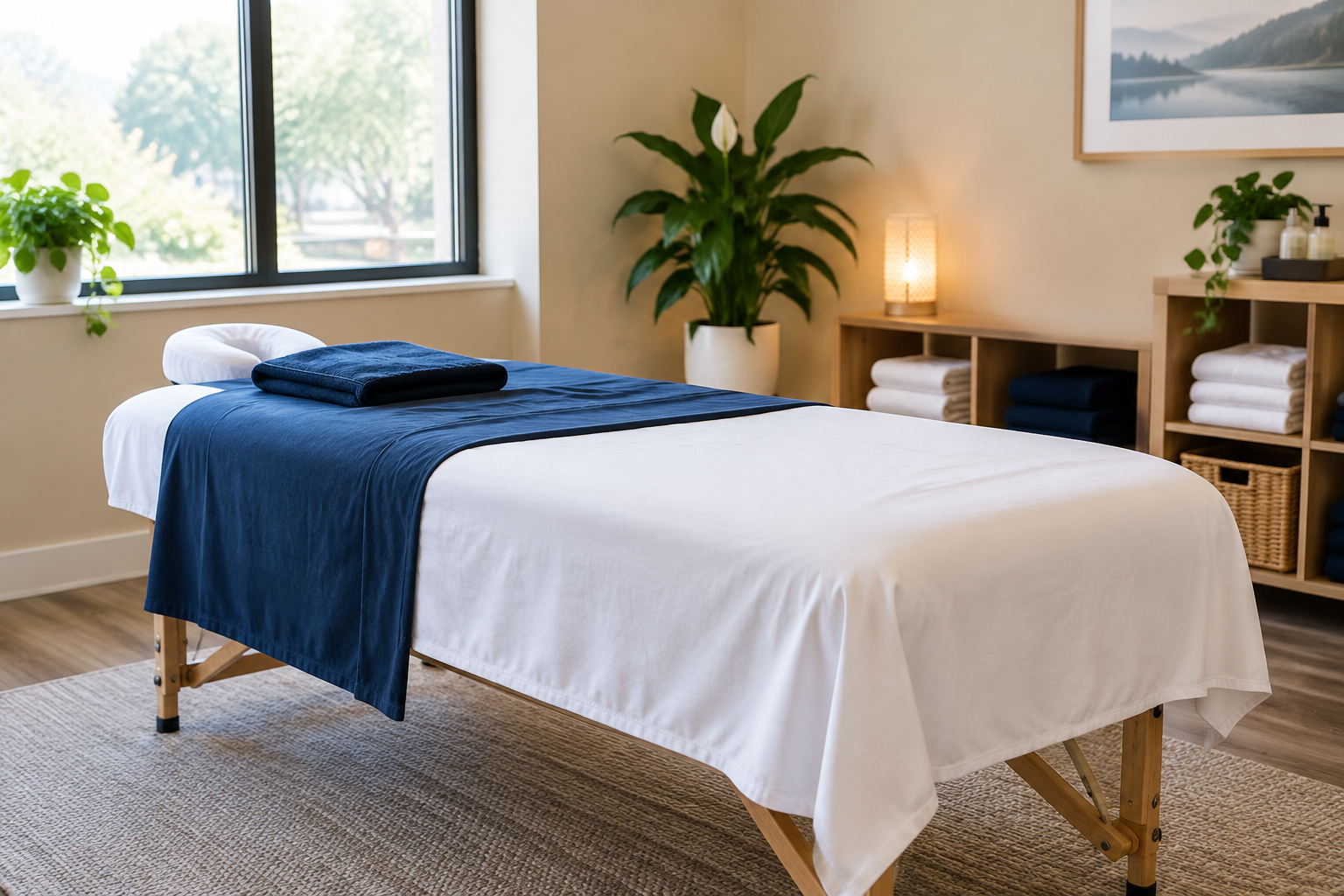
Massage therapy draping in Markham should protect your privacy, comfort, and ability to choose what happens during an appointment. Ontario standards require RMTs to discuss clothing and draping options, explain positioning, obtain informed consent, and keep you covered except for the area being assessed or treated.[1][2]
What does draping mean during massage therapy?
Draping means using a sheet, towel, clothing, or another suitable physical barrier to cover areas that are not being assessed or treated.[1] Ontario's massage therapy standard says patients should be effectively covered for comfort, safety, privacy, and professional boundaries.[1]
An RMT should discuss your clothing and draping options and consider your needs, views, preferences, and concerns.[1] You may also remain in clothing that is suitable for the assessment or treatment if that is your preference.[1]
Before the assessment or treatment begins, the RMT should explain how to prepare and position yourself.[1] If anything is unclear, ask what will remain covered, which area the RMT proposes to assess or treat, and whether the plan can be changed.[1][2]
Can you choose how much clothing to remove?
Yes.[1] You can discuss what you are comfortable removing, and you can choose to remain clothed when suitable for the proposed care.[1] Removing more clothing does not automatically make a massage more effective.[1]
If your clothing or draping preference changes what techniques are practical, the RMT should explain the options.[1][2]
A modified approach may be possible, but the exact plan depends on the assessment, the treatment goal, professional judgment, and your consent.[1][2]
What should informed consent cover?
Consent is required before an RMT conducts an assessment, provides treatment, or changes a treatment plan.[2] The discussion should cover the nature of the proposed treatment, expected benefits, risks and side effects, alternatives, what may happen without treatment, and your right to ask questions or request that care be stopped or modified.[2]
Consent continues throughout the appointment.[2] The RMT must monitor your response and recheck consent when appropriate.[2] You can say:[2]
- "Please explain how I will be draped."[1][2]
- "I would prefer to keep this clothing on."[1][2]
- "Please uncover only the area you are treating."[1][2]
- "I want to change position or pause."[2]
- "Please stop the assessment or treatment."[2]
What rules apply to sensitive areas?
Ontario's consent standard has added requirements for specified sensitive areas.[2]
It requires written or electronic informed consent before every assessment or treatment of the upper inner thighs, chest wall muscles, or breasts.[2]
Breast assessment or treatment is limited to a clinically indicated reason requested by the patient.[2]
Consent for assessment or treatment of the buttocks must be written or electronic at the first visit in a treatment plan and verbally confirmed before each later treatment in that plan.[2]
These requirements do not remove your right to decline, ask for an alternative, or withdraw consent.[2] If you do not understand why an area is being proposed, ask the RMT to explain its relevance, the draping method, possible alternatives, and what will be documented.[1][2]
How is your privacy protected before and during the appointment?
An RMT should collect only personal health information reasonably needed for safe and effective massage therapy care.[3] You may ask why information is being collected, and the RMT should explain the reason.[3]
The draping standard also allows a patient to have another person accompany them at an appointment if requested.[1] If privacy, accessibility, communication, cultural, or personal comfort needs affect your appointment, raise them before care begins so available options can be discussed.[1][3]
How can you prepare for massage therapy in Markham?
Before the appointment:[1][2][3]
- note the area you want assessed and the activities that concern you[3]
- bring relevant health and medication information[3]
- think about clothing, pressure, positioning, and draping preferences[1][2]
- ask how consent will be handled if a sensitive area may be relevant[2]
- remember that you may pause, change, or decline the proposed care[2]
Markham Pain Clinic lists Massage Therapy as a service. Learn about the service: https://www.markhampain.com/services/massage-therapy
Markham Pain Clinic 8312 McCowan Rd Suite #206 Markham, ON L3P 8E1 +1 905-470-2626
Contact the clinic: https://www.markhampain.com/contact
View appointment availability or request a booking: https://markhampainclinic.janeapp.com/
Frequently Asked Questions
Do I have to remove all my clothing for massage therapy?
No. Ontario's standard allows a patient to remain in clothing that is suitable for the proposed assessment or treatment when that is the patient's preference. Discuss clothing and draping options with the RMT before care begins.[1]
Can I ask for more coverage during an RMT appointment?
Yes. Tell the RMT what coverage would help you feel comfortable. Draping and clothing options should be discussed, and your preferences and concerns should be considered when planning the assessment or treatment.[1]
Can I change my mind after giving consent?
Yes. Consent continues throughout assessment and treatment. You may ask questions or request that the assessment or treatment be stopped or modified at any time.[2]
Can someone accompany me to the appointment?
Yes. The Ontario draping and professional-boundaries standard says patients may have another individual accompany them at an appointment if requested.[1]
Medical Disclaimer
This article provides general educational information about Ontario massage therapy standards. It is not a diagnosis, treatment recommendation, or substitute for advice from a qualified healthcare professional. Treatment suitability and the specific approach depend on an individual assessment and informed consent. Seek appropriate medical care for severe, sudden, rapidly worsening, or otherwise concerning symptoms.
Sources
[1] https://www.cmto.com/rules/standard-of-practice-professional-boundaries-draping-and-physical-privacy — College of Massage Therapists of Ontario: Professional Boundaries, Draping, and Physical Privacy [2] https://www.cmto.com/rules/standard-of-practice-consent — College of Massage Therapists of Ontario: Consent Standard [3] https://www.cmto.com/rules/standard-of-practice-collecting-personal-health-information-from-patients — College of Massage Therapists of Ontario: Collecting Personal Health Information from Patients