Chiropractic Care and Exercise for Back Pain in Markham
Published by Markham Pain Clinic · November 24, 2026
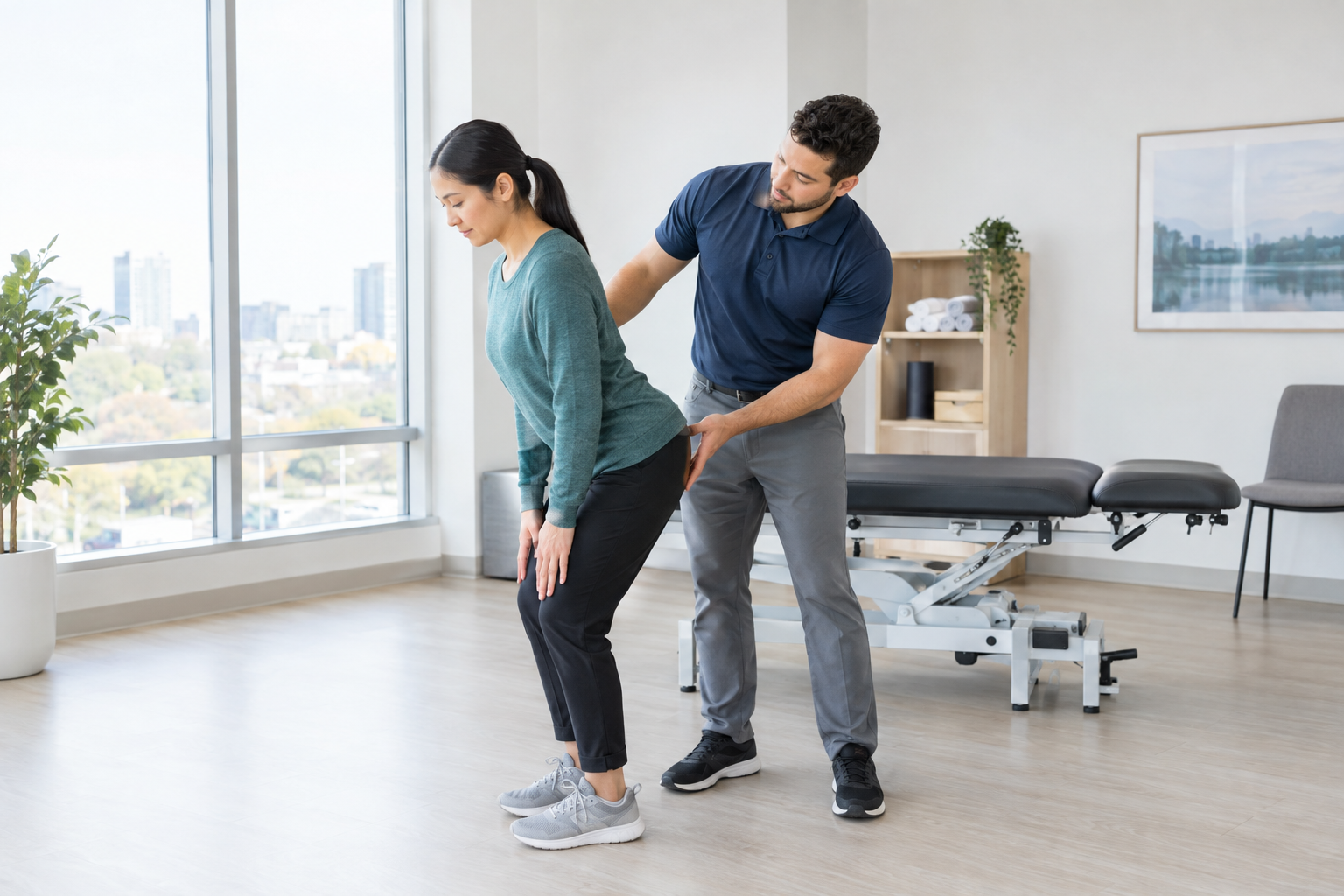
For low back pain, chiropractic care does not have to mean hands-on treatment alone.[1][3] Current guidance supports assessment, education, staying active, and exercise matched to the person; manual therapy may be considered as one part of that plan.[1][2] The right mix depends on your symptoms, preferences, abilities, and safety screening.[2][3]
Why combine chiropractic care and exercise for low back pain?
Exercise gives you an active part in care.[1][2] It can be chosen around the movements and daily activities that matter to you, while education can help you understand the plan and manage flare-ups.[1][2] NICE’s low back pain guidance says manual therapy should be considered only as part of a treatment package that includes exercise.[1]
This does not mean every person needs spinal manipulation or the same exercise routine.[1][3] Ontario’s manual-therapy tool says the decision to use manual therapy should account for patient preference, function, and the absence of absolute contraindications.[3]
What may a chiropractic assessment include?
A chiropractor may ask when the pain began, what makes it better or worse, whether symptoms travel into a leg, and how the problem affects sleep, work, walking, lifting, or exercise.[1][2] A physical assessment and discussion of your health history can help shape the plan and identify when another type of care or referral may be more appropriate.[2][3]
Useful details to share include:
- How and when the current episode started.[1][2]
- Which movements and daily tasks are difficult.[1][2]
- Any numbness, tingling, weakness, recent trauma, or major change in health.[3]
- Your medicines, medical conditions, previous care, and goals.[2][3]
New or progressive weakness or widespread changes in sensation need prompt medical assessment, and suspected cauda equina syndrome is an emergency.[3] Do not wait for a routine chiropractic appointment if symptoms feel urgent or rapidly worsen.[3]
What could an active care plan look like?
The plan should be based on the assessment, not a standard handout.[1][2] Depending on your needs and preferences, it may include:[1][3]
- Clear information about low back pain and the care options.[1][2]
- Guidance for staying active or returning gradually to usual tasks.[1][2]
- Exercises chosen for your current ability and goals.[1]
- Manual therapy when appropriate and agreed upon.[1][3]
- A review point to check whether pain and function are changing.[2][3]
Markham Pain Clinic describes its chiropractic service as hands-on care that may include adjustments, joint mobilization, soft-tissue techniques, exercises, or posture guidance.[4] A proposed technique should be explained before it is used, and you can ask how it fits the broader plan.[3]
How can you judge whether the plan is useful?
Agree on practical measures at the start.[2][3] These might include walking for a set time, sitting through a commute, lifting a usual household item, sleeping more comfortably, or returning to a modified activity.[2] Reassessment should look at function as well as pain and should change the plan when progress stalls or symptoms worsen.[2][3]
Ask these questions:
- What did the assessment find?
- Why are you recommending this exercise or hands-on technique?
- What changes should I watch for between visits?
- When will we review the plan or consider a referral?
Where can you learn more or book in Markham?
Markham Pain Clinic offers chiropractic care at 8312 McCowan Rd Suite #206, Markham, ON L3P 8E1.[4]
Learn about chiropractic care: https://www.markhampain.com/services/chiropractic-care
Call +1 905-470-2626 or contact the clinic: https://www.markhampain.com/contact
View appointment availability: https://markhampainclinic.janeapp.com/
Frequently asked questions
Does chiropractic care for low back pain always include an adjustment?
No. The clinic lists adjustments, joint mobilization, soft-tissue techniques, exercises, and posture guidance as possible parts of care.[4] The assessment, your preferences, safety considerations, and the clinician’s judgment should guide what is proposed.[2][3]
Should exercise be part of a low back pain plan?
Guidance supports exercise chosen around a person’s needs, preferences, and capabilities.[1] NICE says manual therapy should be part of a treatment package that includes exercise when manual therapy is used for low back pain.[1]
Do I need to stop normal activity during a flare-up?
Not automatically. Guidance encourages self-management and a return to meaningful activities, but the amount and type of activity should fit your symptoms and assessment.[1][2] Seek medical advice when symptoms are severe, rapidly worsening, or include concerning neurological changes.[3]
Conflict disclosure
This educational article is published by Markham Pain Clinic, which offers chiropractic care in Markham.[4]
Medical disclaimer
This article provides general education and is not a diagnosis or a substitute for individualized medical advice. A qualified healthcare professional should assess persistent, severe, worsening, or concerning symptoms and advise whether chiropractic care or exercise is appropriate for you.
Sources: [1] https://www.nice.org.uk/guidance/ng59/chapter/recommendations — NICE: Low back pain and sciatica recommendations [2] https://www.who.int/news-room/fact-sheets/detail/low-back-pain — WHO: Low back pain fact sheet [3] https://chiropractic.on.ca/standard-document/cep-manual-therapy — Manual Therapy as an Evidence-Based Referral for Musculoskeletal Pain [4] https://www.markhampain.com/services/chiropractic-care — Chiropractic Care in Markham | Markham Pain Clinic